Maths at Newbold Church School
Here at Newbold Church School, we have the National Centre for Excellence in the Teaching of Mathematics’ (NCETM’s) definition of mastery as part of our longer whole school aim. We share the ethos that through a whole class approach, whilst some of our children will spend longer on particular mathematical concepts (through interventions e.g. pre-teach, SOS time, post-teach), others will reach a deeper level of understanding.
‘Mastering maths means pupils acquire a deep, long-term, secure and adoptable understanding of the subject. The phrase ‘teaching for mastery’ describes the best elements of classroom practise and school organisation that combine to give pupils the best chances of mastering maths. Achieving mastery means acquiring a solid enough understanding of the maths that’s been taught to enable pupils to move onto more advanced material’. (NCETM)

We firmly believe the teaching of Mathematics in our school is strengthening each year. We follow the White Rose Maths Mastery Scheme from Nursery to Year 6 and these materials have historically proven to be very successful at our school. All lessons are carefully planned and sequenced and aim to build on all forms of prior learning. All children are regularly exposed to problem solving activities and this demands they use logical reasoning to explore and explain concepts daily. Using a concrete-pictorial-abstract approach throughout school, our children develop a deep and sustainable understanding of mathematics. Children are encouraged daily to work collaboratively to help them make sense of these problems and concepts.
At the heart of our teaching of mathematics is a desire to develop a pupil’s love of the subject; to inspire, stimulate and achieve. We place great value on skills of mathematical fluency, reasoning, perseverance and resilience, when developing a pupil’s knowledge and understanding of mathematics.
At NCS, we promote pupils’ SMSC development through mathematics in the following ways:
- We facilitate moments of pleasure and wonder when a pupil solves a problem for the first time, or discovers a more elegant solution to that problem, or suddenly sees hidden connections.
- We help pupils to recognise how logical reasoning can be used to consider the consequences of particular decisions and choices; mathematics is used to give pupils the confidence to question, investigate, prove and explain.
- We support and encourage pupils to work together productively on complex mathematical tasks: to recognise the power of collaboration when using collective talent and ability to solving problems.
- We help pupils to appreciate the contribution that mathematical excellence has made to the development of our society, and continues to make in our increasingly technical world.

Mathletics is an online tool which Years 1-6 use in a variety of different ways. Each week, our children are set a differentiated online homework activity. Teachers are able to view how the children have performed on Mathletics and can unpick misconceptions which is something that proves to be incredibly useful. Each year group hosts a Maths homework club too which children can attend in the school day should they wish.
As the children progress through Mathletics they earn points, which then translate into certificates. The children can choose to play against their class peers (or other children around the world) to win more points and the more points they receive, the higher the level of certificate they will gain, and they can change their avator by purchasing new features with their points.
The points system can be a little complicated, so here is a parent guide to help you understand the process.
Maths in KS1
In Key Stage 1 the children use a very hands-on approach to maths. It is important to use concrete materials prior to the children being able to understand and apply their maths knowledge to pictorial and abstract concepts. The children start with a full class practical input, where children can practise their skills and apply their knowledge, prior to completing independent work.
The teachers in KS1 follow the needs of the children, e.g. if the children need more practice pr reinforcement in a particular area of maths, we will adapt our programme to facilitate this.
We follow the following plan spiral curriculum throughout the year, allowing us to revisit and build on existing skills and knowledge.
The children complete daily flashbacks to revisit previous skills and knowledge, ensuring the children are remembering more throughout the year. Tiny the turtle helps the children to know that is is ok to make a mistake in maths, as long as we keep trying until we get the correct answer.

Alongside White Rose Maths, the children in Year 1 have maths challenges to complete in their continuous provision which require them to practise and build on the skills they are learning in their direct teaching. This might be a hands-on activity to develop their capacity skills, a 3D shape hunt or using concrete resources to work on problem solving for greater than / less than / equal to.
The children have a wealth of maths manipulates to explore daily.
The children also work with talk partners during their maths lessons to help them work out problems prior to doing their work in their workbooks. This helps the children to talk through their thinking with their peer and work through questions modeled by the teacher.
Maths in KS2
Our Mathematics lessons
Mathematics lessons at NCS have a clear structure and are sequenced so every mathematical concept is deeply secured. Pupils begin each lesson with daily arithmetic starters to support fluency. These starters have had a big impact on our children as through revisiting prior knowledge, whether it be from the previous year of a previous topic, mathematical fluency skills are being embedded each day. Our daily arithmetic starters are also a very useful assessment tool for teachers which helps lessons be planned and sequenced to the needs of our children.
Once the daily starters are completed and the learning objective has been shared, the children begin working through the clear structure of the lesson which White Rose Maths enables them to do. Collaborative learning is central to this process as the children are encouraged to work together to explore new concepts and reason/explain their findings. Visual representations and practical equipment are used to support their learning as teaching staff continue to challenge the children through questioning.
All pupils are given the chance to work independently as they move on to work in their own NCS books. Children regularly receive feedback from staff and view the process of unpicking misconceptions as a real opportunity to make a difference and positively impact our children’s learning development. With this ethos in the forefront of our minds, the children understand and accept that making mistakes is a normal and beneficial aspect of learning. At the end of each lesson, pupils are given a reasoning/problem solving style question which demands they respond to a question based on that lesson’s learning objective.
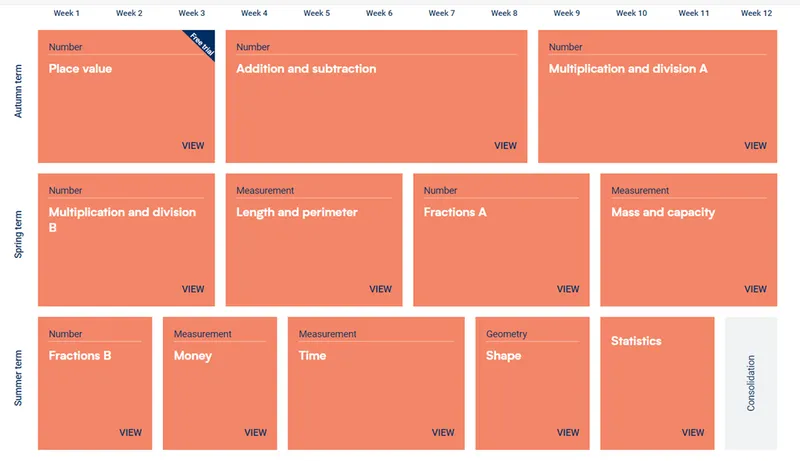
Y3 maths scheme of learning:
Y4 maths scheme of learning:
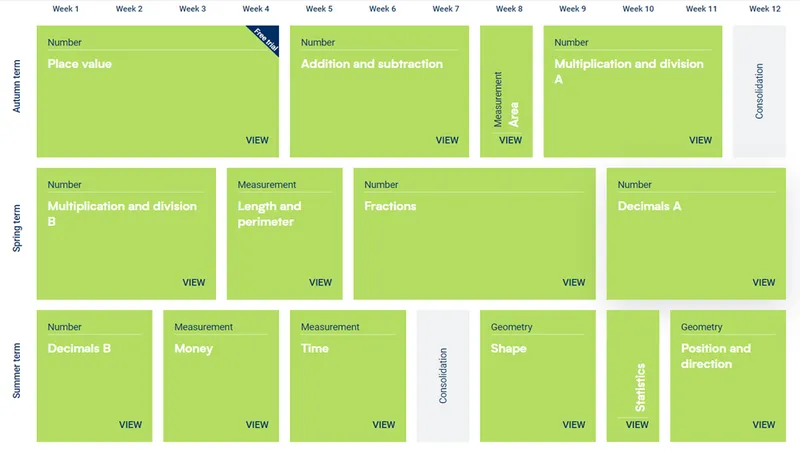
Y5 maths scheme of learning:
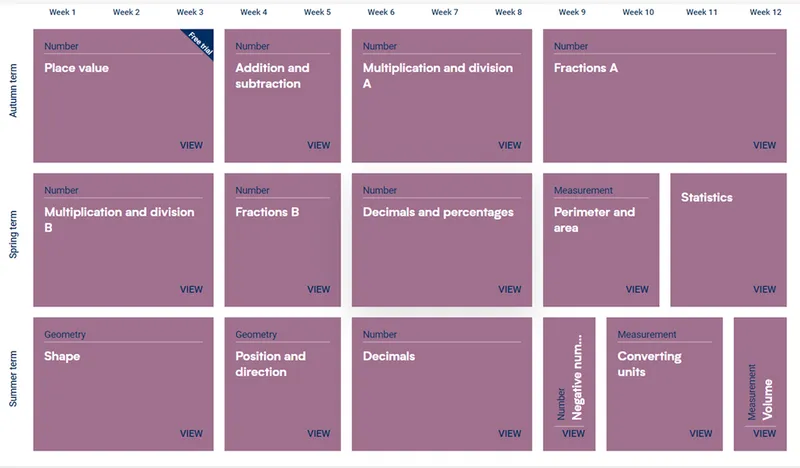
Y6 maths scheme of learning:
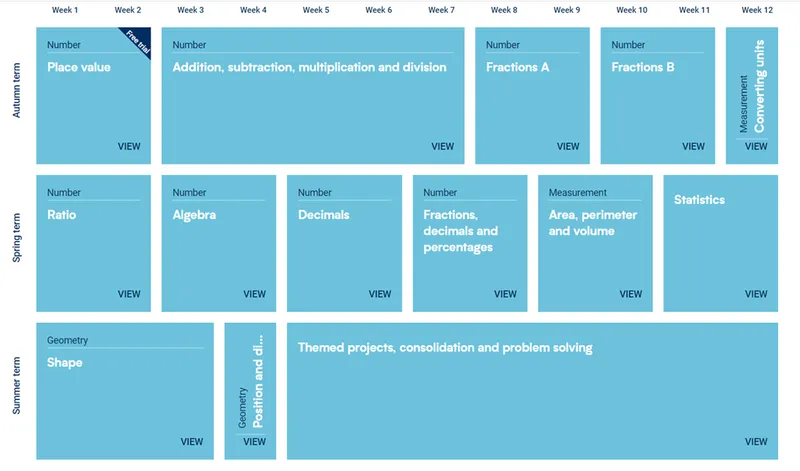
Cross-curricular opportunities
Maths is an integral part of the whole curriculum at Newbold Church of England Primary School (NCS). Teachers are always identifying opportunities to factor mathematics into the wide curriculum offered as we see it as imperative children are given the chance to apply their mathematical knowledge and skills in different contexts. Teachers plan and sequence mathematics into all lessons, whether that be Science, History or even PE. It is desired that through stretching the boundaries of mathematics across the whole curriculum, the subject becomes real and meaningful to our children.
Times Tables Rockstars
The teaching of Times Tables is central to a wide range of mathematical concepts, hence why it is given such a high status in our school. Years 1-6 use the ‘Times Tables Rockstars (TTRS) resource to help increase both the accuracy and speed of their times tables. Each child has their individual log in and we have weekly battles between classes to see which class can be the most successful. TTRS is something which really engages our children and it has a hugely positive impact. Follow the link below to access TTRS.
Times tables
In order to increase the children's fluency in recalling multiplication facts, each class partakes in weekly activities and a times table check. Follow the link below to access times tables activities.